Let's talk about
Why is GOLD Considered the Safest Investment in this Economy
In a world that flips from inflation scares to growth shocks in a single quarter, investors want one thing above all: resilience. Gold has a unique claim on that role. It is liquid, globally recognized, and historically uncorrelated with the very risks that punish equities. Yet “safest” does not mean “perfect” in every scenario. The right way to use gold is nuanced, and the evidence is richer than the clichés.
SandstoneFX has prepared this article into a practical, forward-looking playbook: when gold really protects you, how much to hold (RRR), and why the way you hold it matters.
The safe-haven idea, defined
A true safe haven holds its value when markets are in turmoil. In practice, that means low or negative correlation with the assets that are falling, precisely when you need protection most. Gold has long fit this brief across many crises, which is why it remains the world’s default financial refuge.
But there are two big questions that matter for real portfolios:
- Should you hold gold all the time, or only during crises.
- Is gold’s protection universal, or does it depend on why markets are falling.
The answers, according to SandstoneFX’s analysis, are clear.
Key finding 1: Gold works best as a strategic, always-on allocation
Some of the best traders have tested two approaches from 1971 to 2022:
- Strategic allocation: keep a constant slice of gold in a stock-heavy portfolio.
- Tactical allocation: sell stocks and buy gold only during crisis thresholds, then rotate back.
They simulate monthly, weekly, and daily rebalancing, and compare outcomes with and without perfect timing. The headline result is simple. Timing mistakes kill the tactical edge. With real-world uncertainty, strategic buy-and-hold gold generally outperforms tactical switches. The reason is practical: investors act too early or too late, and the benefit erodes.
What size works: Over the long sample, the optimal risk-return tradeoff for a strategic stock-gold mix typically sits around a modest 4 to 6 percent gold weight. In the 1971 to 2022 analysis, the highest Sharpe ratio appears near a 4 percent gold share; from 2000 to 2022 the sweet spot shifts toward 6 percent. In recent years; 2023 to 2025 this percentage has inched up 8 to 10 percent.
What about tactical moves: If you could foresee crises, rotating fully into gold ahead of market losses would look spectacular on paper. In synthetic “perfect foresight” tests, total wealth can be amplified massively by avoiding down months. But once you introduce realistic lags and uncertainty, outperformance only shows up after very large monthly stock drawdowns, and even then the advantage is fragile. Tactically switching helps mainly when monthly losses exceed roughly 10 percent, and holding the position too long is costly.
Duration matters: Safe-haven episodes are usually short. Extending the holding period after a shock reduces benefits. SandstoneFX found that medium, disciplined windows work better than long holds once the immediate short storm passes.
Bottom line: For most investors, gold is best used like a seatbelt you always wear, not an airbag you hope to deploy at the perfect moment.
Take April’s tariff headlines. Bitcoin slipped, stocks wobbled, and the press sounded alarms.
Less than a week later, the Nasdaq Composite roared back with a 12% surge, its strongest single day in nearly a quarter century.
Fast forward a few months, and the entire market was setting fresh highs. Traders who dumped positions at the bottom booked losses. Traders who held steady with a clear plan captured the rebound.
Key finding 2: Gold’s safety is conditional on the type of shock
In which crashes does gold actually behave like a strong safe haven. SandstoneFX classifies every S&P 500 daily plunge larger than 2.5 percent from 1979 to 2020 by using the Genomes OnLine Database event database, then models gold’s behavior around those events.
Result: Gold is not an all-weather shield. It is a strong safe haven when downturns are driven by macroeconomic news, terrorism, or trade policy shocks. It is weaker or unreliable when falls are driven by other causes like commodity swings, elections, or idiosyncratic corporate news. On a frequency-weighted basis, gold shows strong safe-haven behavior in nearly half of major negative jumps because macro news (such as Trump tariff scares) is the most common trigger.
Investors should monitor why risk is rising. For macro, trade, or security-related stress, gold’s defensive power is historically robust. For other catalysts, rely less on gold alone and diversify with complementary hedges.
Robustness checks across GARCH specifications and alternative gold price series do not change the core takeaway. The conditional story holds.
What this means for portfolios today
1) Treat gold as a permanent core hedge, not a market-timed trade
Keep a baseline allocation that fits your risk tolerance. The long-run evidence favors a small but steady weight that smooths drawdowns without dragging returns in expansions. The historical sweet spot is often in the low single digits for diversified equity portfolios.
2) Use tactical overlays sparingly and only for large, macro-driven stress
If you do add a tactical layer, be explicit. Define the trigger ex ante, limit the holding window, and plan fast re-risking once the macro shock fades. Tactical rotations helped mainly for severe monthly losses in the data. Over-staying the hedge is where performance goes to die.
3) Diagnose the shock
Gold’s best protection shows up in macro or systemic episodes. Treat earnings recessions, regulation noise, and commodity quirks as lower-reliability zones for gold’s defense and complement with other tools like duration, cash buffers, or explicit downside hedges.
Why gold still earns the “safest” label
Liquidity across regimes
Gold trades around the clock, across borders, and outside any single government’s balance sheet. That makes it a neutral reserve in cross-border stress.
Diversification when it matters
Over long horizons, gold’s correlation with stocks is near zero, and during down months for equities, gold’s average return tilts positive. That is the definition of ballast.
Behavioral and institutional demand
In macro shocks, households, funds, and central banks tend to crowd into gold. That reflex is part of why the conditional safe-haven effect persists in systemic stress.
Practical allocation blueprint
- Core: 5 to 10 percent gold as a standing allocation for diversified equity investors who want durable drawdown control without heavy carry costs. This is consistent with the risk-return improvements seen in the long sample, with the highest Sharpe ratios clustering in that band across eras.
- Tactical “macro shield”: Optional, rule-based add-on for severe macro shocks. Use objective triggers, tight windows, and clear exit rules. Expect benefit only when losses are large and clearly macro in origin.
- Complements: Pair gold with duration and cash for inflation-growth mix uncertainty, and consider tail hedges where liquidity is assured. Gold is powerful, but not universal, especially in non-macro selloffs.
FAQs
Isn’t gold more volatile than stocks sometimes
Gold can be volatile in quiet equity markets, yet its value as a hedge shows up when stocks are falling, where its average return skews favorable. That asymmetric usefulness is the point.
What about holding 10 percent or more
Some mandates allow higher weights. The research tested up to 10 percent and found the best risk-adjusted outcomes typically below that, though investor specifics matter.
Did gold fail during COVID-19
Gold’s protection weakened in parts of 2020 because the selloff was not purely macro and was tangled with liquidity and policy dynamics. This aligns with the conditional safe-haven evidence.
The verdict
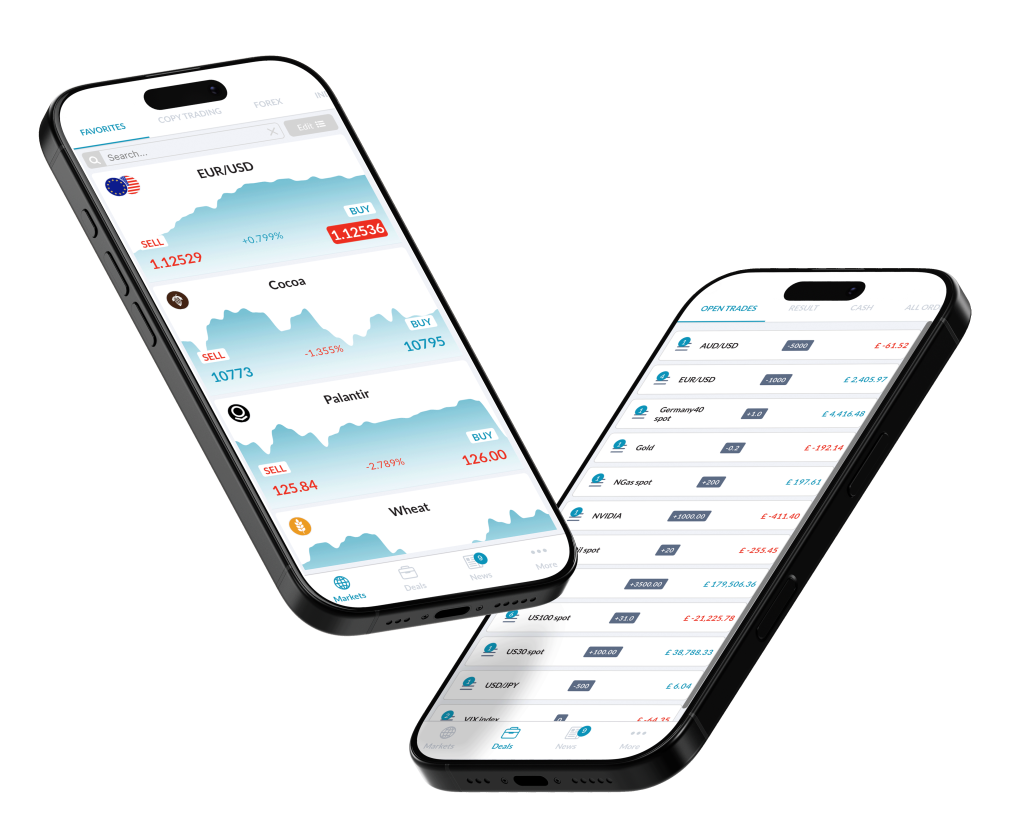
Gold merits its reputation as the safest investment in this economy because it reliably counters the type of risk that most damages portfolios: broad macro stress. The smartest way to harness that power is to own some all the time, then consider disciplined, time-boxed boosts in truly systemic downturns by using SandstoneFX to buy and hold Gold with no hidden fees, full transparency, cutting edge market charts and the best trading tools & education on the market. That is how you turn a timeless store of value into a modern risk-management edge – with SandstoneFX.
Why Invest with SandstoneFX?
At SandstoneFX, we make investing in FAANG and MAMAA stocks straightforward. You can:
- Trade US stocks on a modern, intuitive platform
- Access low-cost ETFs that include these tech giants
- Benefit from competitive fees and transparent pricing
If you do not yet have an investment account with SandstoneFX, you can open one online quickly and easily.